Small Schools are utterly vital to the independent educational sector; we have the capacity to care.

The Spring is a period where we are all hard at work at Cransley - pupils, colleagues and no doubt for you as well.  Congratulations on making it through a long dark winter!

This month, in particular, has been a curious one, with the announcement that Alderley Edge School for Girls will close this summer.

As an educationalist, it is difficult when colleagues in independent schools who, for whichever reasons (and there will be many), have little option but to desperately look for work, whilst giving their every effort to a school they love.

As a busy headteacher, it has been a happy challenge to have an already-full diary pushed aside (or, if I’m honest, moved to the evening) to make way for individual tours of the school, giving me the chance to warmly welcome new families keen to visit our setting.

As a School leader, it is difficult to observe and hear about how other schools lean on traditional, high-pressure selection panels, whilst we believe that true potential is discovered through dialogue and taster experiences.

As a parent, it is heartbreaking to meet so many families, tired and affected by the questionable treatment of already vulnerable and emotionally exhausted girls, who, it appears, have simply been paraded in front of selection panels and selected by examination and presentation with only a handful of days’ notice. 

It is a deeply emotional, and almost traumatic time for many - and kindness, not critique, must be in ample supply. We must be sympathetic, not selective.

We have and will continue to attract pupils to our School: Parents of daughters who intently want a small setting, where their child is noticed and known.  Settings where the girls will not be put on display, but encouraged, nurtured and carefully integrated.  

This is what we have done, to best support the families from AESG who have enquired: Listen; get to know the child in person; offer a bespoke individual tour; have supportive taster days, not mass examinations; initiate early friendships and support networks; aid a smooth and sympathetic transition; invite old Alderley Edge pupils to venture beyond as new Cransley pupils - or even better, to be both.  

This way, the academic growth of the child is not just sustained, but boosted and enhanced.

We will reach our capacity in most year groups, as a result, and we will protect the service to existing families - those recently joining us and those with whom we have had a relationship over many years.

Small schools have the time, the motivation and the capacity to care.

Indeed, as we hosted the North West regional meeting of ISBA (Independent Schools’ Bursars Association) at Cransley, I welcomed the opportunity to remind the sector that the most innovative schools in the UK right now are those that remain agile, positive and pupil-centred. 

Do not be under any illusion: small Independent Schools are utterly vital to the educational sector.

We make decisions quickly and effectively;

We innovate and are quick and flexible in bringing about change, leading the way in academic and pastoral service.

We maintain fiscal and operational agility, adapting to opportunities and challenges.

We can be intentionally the ‘right size’ for our School - not too big, not too small.

We are invariably more inclusive, meeting the needs of more;

We are rarely arrogant, elitist and selective, but rather humble, gentle and modest;

We reduce middle management, putting front-line teaching excellence first, not last, and inverting the management structure so that experienced multi-skilled leaders serve and facilitate those providing the pupils’ education; 

We support each other - sharing ideas, without unnecessary and counterproductive notions of competition and rivalry;

And - most importantly - we nurture relationships.  We listen and we care.

I wish the families and employees of Alderley Edge School for Girls well.  I hope they are able to celebrate the rich history of the school which had (and has) so much importance in the lives of girls and women across the country.

Richard Pollock

Headteacher
Navigating the GCSE Journey: A Partnership for Success and Wellbeing

This entry into the Head’s Journal is written by Mrs Clare Lancaster, Deputy headteacher and Senior Academic Lead. After seven years in post, Clare is stepping away from the role and focusing her attention on her first professional love: teaching Geography. She will be much missed.

Dear Parents and families,

As we move further into the academic year, the rhythm of the assessment cycle begins to beat more loudly for our pupils, particularly for those about to embark on their GCSE final assessments in Year 11, but also for pupils preparing for school based assessments next term. Whether your child is just beginning to explore their options or is entering the final stretch of revision, I wanted to share some reflections on the merit of home study and the broader context of the English examination system.

The Purpose of the Two-Year Marathon

The GCSE framework in England is designed as a linear assessment—a rigorous culmination of two years of focused inquiry. It is important to view these assessments not as a sudden hurdle, but as the natural end point of a long-term intellectual journey.

While the terminal nature of these exams can feel daunting, it provides our pupils with a unique opportunity to develop synoptic thinking: the ability to see how different parts of a subject connect. This deep engagement is what prepares them for the complexities of further study.

The Merits of Home Study: Beyond the Classroom

While our teachers provide the roadmap within the classroom, it is often during independent home study that the most profound learning occurs. We encourage home study not merely to consolidate pupil’s learning, but to foster three vital life skills:

  • Self-Regulation: Learning to manage time and prioritise tasks without the structure of hourly lessons within the school day.

  • Metacognition: The ability for a student to identify their own gaps in knowledge (‘knowing what they don't know’).

  • Resilience: The quiet discipline of revisiting difficult concepts until they are mastered.

A Balanced Perspective

As much as we strive for academic achievement, it is vital to remember that while GCSEs are significant, they are not the ‘be-all and end-all’ of a child's identity. These examinations are a snapshot of a pupil’s performance at a specific moment in time. They are an important key to certain doors, but they do not measure a child’s character, their empathy, their creativity, or their capacity for future success. Our goal is to produce well-rounded individuals who not only exam-ready, but also life-ready.

How You Can Support

The most effective support at home is often not academic, but emotional and environmental. Providing a quiet space, encouraging a phones-away policy during study sessions, and ensuring they maintain their sporting or creative hobbies will do more for their final grades than any amount of late-night cramming.

Your child may be the type who likes to share every minute detail of their school life with you, including the revision pages and support offered by subject teachers on their Google Classroom. Or (and I suspect many may fall more into this category) they may be quite secretive regarding their home learning tasks and you may be completely unaware of what has been provided already. For parents whose child falls into the second category, I provide a link to a revision resource for pupils from Year 9 upwards. This contains useful links to subject specific revision resources and pupils know that there are also revision areas on their subject’s Google Classroom.

Key Stage 4 Revision Booklet

We are immensely proud of the hard work our pupils are putting in, and we thank you for your continued partnership in supporting their journey.

Warm regards,

Mrs C Lancaster

Deputy Headteacher, Senior Academic Lead

Whatever the Weather - the importance of outdoor learning in a forward-thinking curriculum

This Head’s Journal entry is written by Mr Rob Morris, the Head of the Junior School, who conceived, created and curates our Community Farm, and who here outlines why classrooms are often the last place in which children want to learn.

Whether you were left to your own devices in your garden, or sent out to the local park for the day and not expected home until dark - as a child, being outside was just part of growing up. Today, however, the reality of growing up is different. Screens prevail. Fear of something terrible happening at the park when unsupervised supersedes rational risk-management. Children, in general, spend more time indoors, alone and self-occupied - a product of society no doubt - than ever before. 

This means that time in school needs to provide as much of a counterbalance as possible. 

Learning Beyond the Classroom

By engaging with the physical world, our pupils and your children benefit from what researchers call "sensory-rich" environments, which have been shown to improve long-term memory retention and reduce stress levels. Whether it is measuring the geometry of a planting bed to understand the perimeter, finding inspiration for creative writing in the rustle of the fruit alleys, or studying the historical impact of land use on our own doorstep, we ensure our children are physically and mentally active. This approach fosters a lifelong love for learning that is as expansive as the estate itself, ensuring that the farm is not just a destination for Science, but a canvas for our pupils' entire academic journey. 

Cransley Community Farm: A Living Classroom for Sustainable Futures

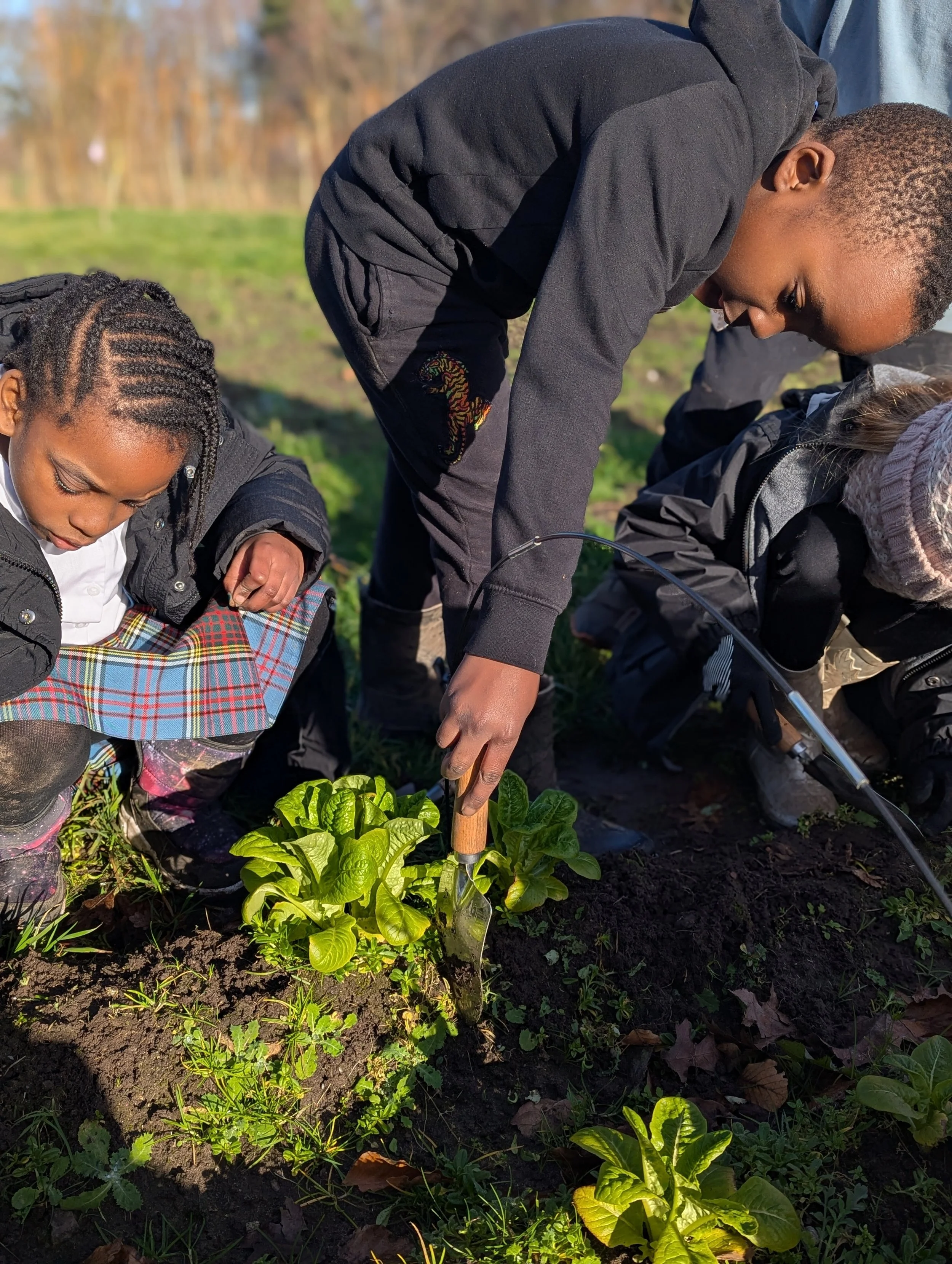
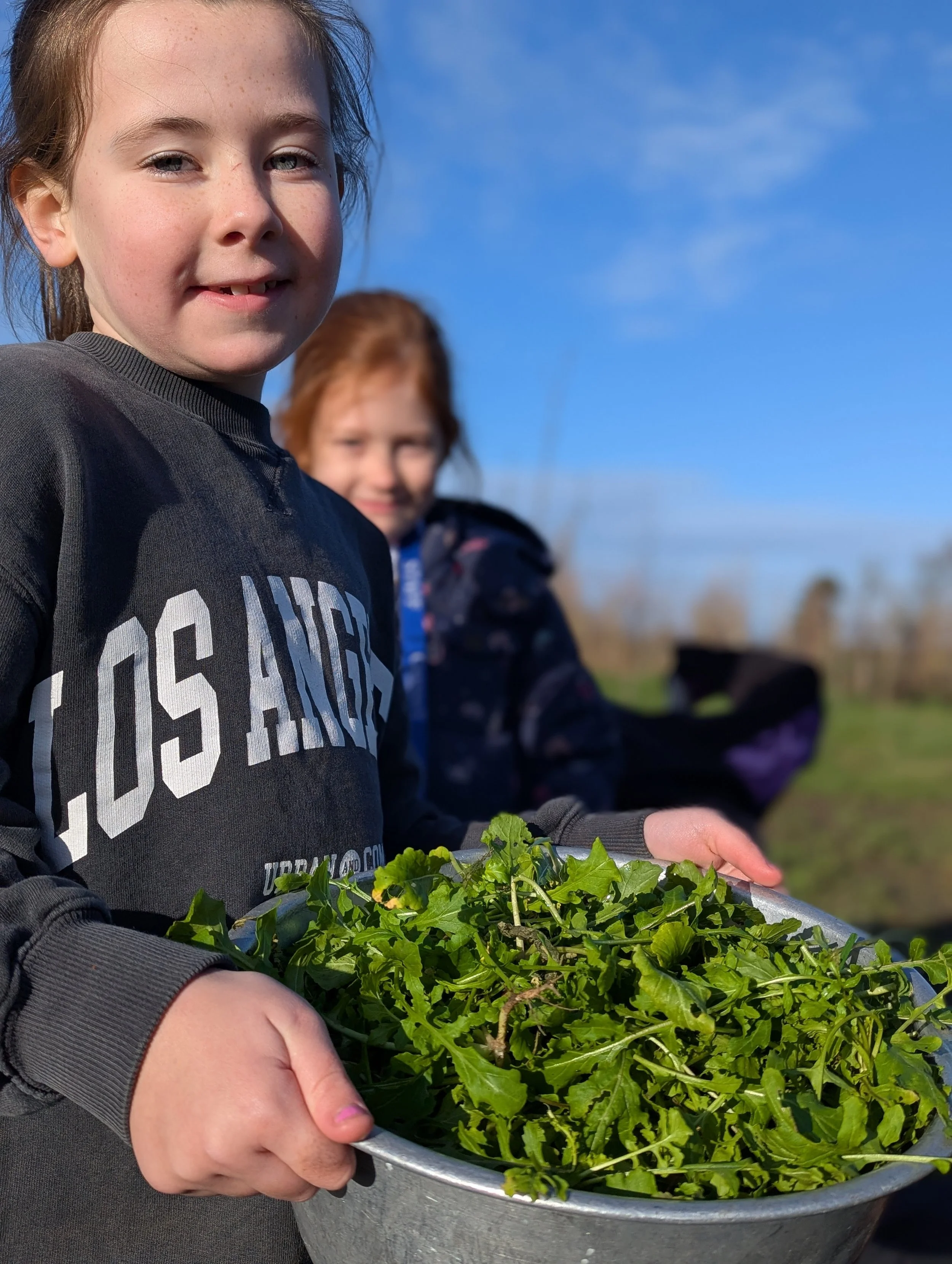
At Cransley, our Community Farm is more than just an outdoor space; it is a core strategic pillar of our Sustainable Futures Curriculum. One year into this ambitious project, we have successfully transformed 1350m² of land into a thriving, immersive environment where academic excellence meets practical stewardship. Our use of the Community Farm Project as a ‘living classroom’ has ventured well beyond the narrow scope of a ‘Forest School’, whilst recognising the value that tool use, shelter building and bushcraft skills have for young minds. 

The Research Behind the Practice

To provide further context on why we have embedded this philosophy so deeply into our school life, we draw upon several key areas of educational and psychological research:

  • Attention Restoration Theory (Kaplan & Kaplan): Research suggests that natural environments provide a "soft fascination" that allows the brain’s directed-attention mechanisms to rest. For our students, this means that time spent on the farm "resets" their ability to focus, leading to improved concentration back in the traditional classroom.

  • The Natural Connections Project (Natural England): One of the largest studies on outdoor learning found that 92% of pupils reported enjoying their lessons more when outdoors, while 90% felt happier and healthier. This directly supports our school value of Nurturing Relationships, as children are more positive and collaborative in outdoor settings.

  • Cognitive and Academic Gains (American Institutes for Research): Studies into "place-based education" show that students in programs like our Community Farm often outperform their peers in standardized testing. The ability to apply abstract concepts—such as chemical reactions in composting or biological cycles in our fruit alleys—creates deeper "conceptual hooks" in a child’s memory.

  • Holistic Wellbeing: Continuous exposure to green spaces is scientifically linked to lower cortisol levels in children. By integrating the farm into the weekly timetable, we are proactively supporting the mental health and emotional resilience of every child at Cransley.

Core Educational Research

  • The Natural Connections Project (Natural England)

    • The Study: One of the largest UK-based studies on the impact of outdoor learning on school children.

    • Key Finding: 92% of schools reported that outdoor learning improved pupils’ engagement with learning and 90% reported a positive impact on health and wellbeing.

    • Access the Summary Report here

  • Attention Restoration Theory (ART) – Kaplan & Kaplan

    • The Study: A foundational psychological theory explaining why natural environments improve concentration.

    • Key Finding: Natural settings allow the brain to recover from "directed attention fatigue" (the tiredness caused by heavy screen use or intense classroom focus).

    • Read a digest of the theory here

  • The Impact of Outdoor Learning on Science Attainment (Education Endowment Foundation)

    • The Resource: The EEF provides evidence-based summaries of teaching styles, including "Learning Outdoors."

    • Key Finding: Outdoor learning is particularly effective for Science, as it allows for "real-world" experimentation that cements abstract concepts.

    • Explore the EEF Evidence Database

The "Living Classroom" Philosophy

  • Learning in the Natural Environment (LiNE): Review of Social & Economic Benefits

    • The Paper: A comprehensive review by the University of Plymouth looking at how farms and school gardens build "social capital" and resilience.

    • Key Finding: Students in outdoor programs show significantly higher levels of self-esteem and social confidence.

    • Read the full Research Review

  • Health and Wellbeing Benefits of Plants and Nature (Royal Horticultural Society)

    • The Resource: The RHS provides research summaries on how "hands-on" horticulture reduces cortisol (stress) levels in primary-aged children.

    • View RHS Research & Resources

Sustainable Futures & Food Literacy

  • Why Farming Matters (LEAF Education)

    • The Resource: Our curriculum uses many resources from Linking Environment and Farming (LEAF) to connect children with where their food comes from.

    • Key Finding: Understanding food systems is a critical component of "Sustainable Futures" and environmental stewardship.

    • Visit LEAF Education for Parents

Mr Morris